
Film Making Course Hyderabad: Complete Guide to Syllabus, Fees and Career Path
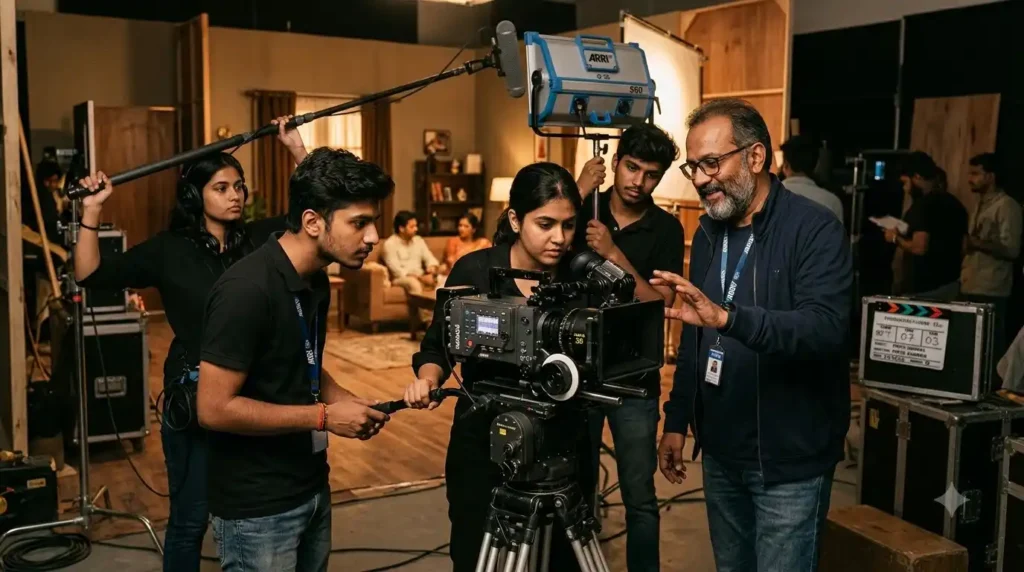
Picking a film making course in Hyderabad is one of those decisions that looks simple from the outside and gets complicated the moment you start comparing institutes. Every website promises “industry experts,” “hands-on training,” and “career support.” What most students actually need is far more specific: what will I learn month by month, how much will it cost, how long will it take, and will I have a portfolio worth showing a client at the end of it?
This guide breaks down exactly that. If you’re a student, a working professional switching careers, a wedding photographer wanting to move into video, or a content creator looking to sharpen your production skills, here’s how to evaluate a film making course in Hyderabad and what a genuinely useful one should include.
Why Hyderabad Has Become a Serious Filmmaking Hub
Hyderabad is no longer defined solely by the Telugu film industry. Today, the city has a thriving ecosystem of advertising agencies, OTT production houses, corporate video studios, wedding cinematography teams, digital marketing firms, and independent content creators, all of which are creating steady demand for skilled filmmakers. That’s exactly why enrolling in a film making course in Hyderabad is a practical career move—you’ll be learning in a city where real opportunities already exist, rather than training elsewhere and relocating later to find work.
This growing production ecosystem also means local studios and creative agencies are more willing to hire interns and entry-level professionals who have completed a structured film making course in Hyderabad, since they already understand camera operations, lighting techniques, production workflows, and editing timelines before stepping onto a professional set.
What a Good Film Making Course Should Actually Cover
1. Pre-Production and Storytelling
2. Camera Operation and Cinematography
Framing, exposure, lens selection, camera movement, and lighting for mood form the foundation of professional cinematography. Many students choose to complement their filmmaking training with a Professional Cinematography Course to develop a deeper understanding of visual storytelling, advanced lighting techniques, shot composition, and camera workflows used across feature films, advertisements, documentaries, and digital productions.
3. Direction and On-Set Workflow
4. Sound Recording and Design
5. Editing and Post-Production
Every film comes together in the editing room. A comprehensive film making course in Hyderabad includes practical training in industry-standard software such as Adobe Premiere Pro and DaVinci Resolve, covering essential skills like storytelling through editing, pacing, transitions, timeline management, and visual rhythm. These post-production techniques play a crucial role in shaping the final impact of any film or video project.
Students who want to pursue post-production as a career often build on these fundamentals by enrolling in a Professional Video Editing Course, where they gain advanced expertise in editing workflows, color grading, audio post-production, and finishing techniques used in films, commercials, and digital content.
6. Color Grading
Raw footage rarely looks cinematic straight out of the camera. Color correction and grading shape mood and tone — something covered in depth in a Professional Color Grading Course, which pairs naturally with filmmaking training.
7. Gimbal and Drone Techniques
Modern productions—from weddings to ad films—expect smooth handheld movement and aerial shots. A Gimbal & Drone Cinematography Course rounds out a filmmaker’s toolkit for these visuals.
Typical Duration and Structure
Most practical filmmaking programs in the city run between 3 to 6 months, structured around weekly sessions, live shoot assignments, and edit reviews. Shorter crash courses exist, but a film making course in Hyderabad built for actual career outcomes usually needs at least a few months to cover pre-production, production, and post-production properly—rushing this sequence tends to produce students who can operate a camera but can’t yet deliver a finished film.
What About Fees?
Career Paths After Completing a Filmmaking Course
- Assistant Director / Director — entry into production houses and independent film sets
- Cinematographer — shooting for films, ad campaigns, or documentaries
- Video Editor — post-production roles across media companies and agencies
- Content Creator / YouTuber — producing and editing your own channel content
- Wedding Filmmaker — one of the fastest-growing freelance segments in Hyderabad
- Corporate Video Producer — in-house video roles at brands and marketing teams
- Freelance Filmmaker — building a client base across events, brands, and influencers
Latest Trends Shaping Filmmaking Training in 2026
- AI-assisted editing tools are speeding up rough cuts, color matching, and audio cleanup, though human storytelling judgment still drives the final output.
- Vertical and short-form content for Reels, Shorts, and YouTube is now a paid skill on its own, not a side hobby.
- Drone cinematography has become standard for weddings, real estate, and travel content, not just big-budget films.
- Hybrid mirrorless and DSLR workflows dominate over traditional cinema cameras for most working professionals starting out.
- Client-ready portfolios matter more than certificates alone—production houses want to see finished work.
Common Mistakes Beginners Make
- Skipping pre-production entirely and jumping straight to shooting, which leads to disorganized footage and unnecessary reshoots.
- Ignoring audio quality while focusing only on visuals—a mistake that becomes immediately noticeable in the final edit.
- Learning software without learning storytelling, resulting in technically polished but emotionally flat films.
- Not building a portfolio during training, leaving graduates with skills but no completed work to show clients or employers.
- Choosing a course based only on price, without checking whether it includes live shoots, mentorship, and access to professional equipment.
Expert Tips for Choosing the Right Course
- Ask to see student project reels before enrolling—this tells you more than any brochure.
- Confirm whether the training includes hands-on experience with professional cameras and equipment, not just classroom theory.
- Check whether the course covers both production and post-production, since most working filmmakers need skills in both.
- Look for mentors who are actively working in the industry rather than teaching only from academic material.
- Prioritize institutes that offer career guidance, internships, or freelancing support after course completion.
Why Choose Restart Academy for a Film Making Course in Hyderabad
Frequently Asked Questions